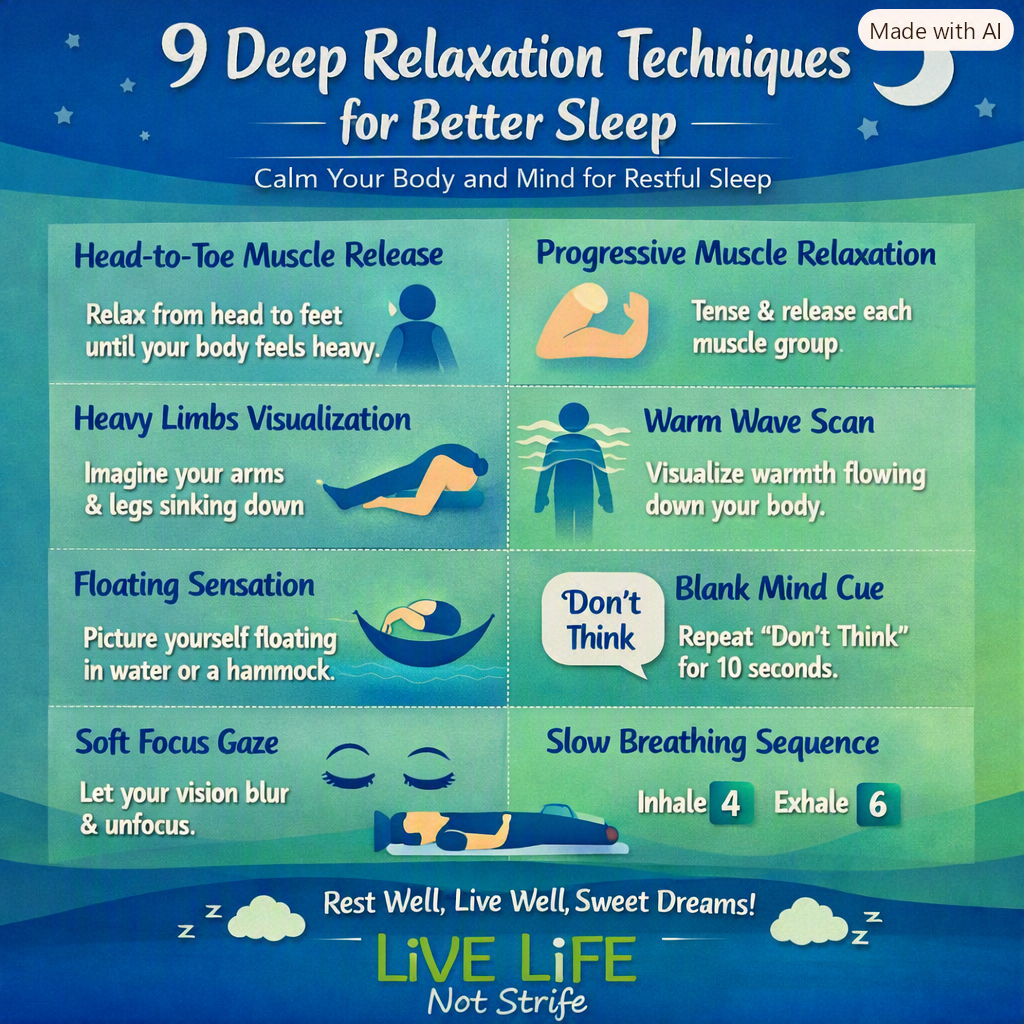
1. Head‑to‑Toe Muscle Release
Relax each area in sequence — forehead, eyes, jaw, shoulders, arms, chest, legs — until your body feels heavy and still.
2. Progressive Muscle Relaxation
Tense each muscle group for 5 seconds, then release for 10 seconds. Move from hands to jaw to shoulders to abdomen to thighs.
3. Heavy Limbs Visualisation
Imagine your arms and legs sinking deeper into the bed — this shuts down motor signals and triggers calm.
4. Warm Wave Scan
Visualise a warm wave moving slowly from your scalp down to your toes, melting tension as it travels.
5. Floating Sensation
Picture yourself floating in water or a hammock — this reduces sensory anchoring and helps the brain detach from external noise.
6. Blank Mind Cue
Repeat “don’t think” for 10 seconds to interrupt mental chatter and ease into pre‑sleep drift.
7. Soft Focus Gaze
Before closing your eyes, let your vision blur and unfocus — mimicking the pre‑REM drift that precedes sleep.
8. Slow Breathing Sequence
Inhale for 4 seconds, exhale for 6 seconds, relaxing a muscle group on each exhale to lower cortisol.
9. Stillness Lock
Once relaxed, stay completely still — no fidgeting or adjusting. Stillness signals the brain that sleep is next.
Which was the most effective for you or was it a combination?