
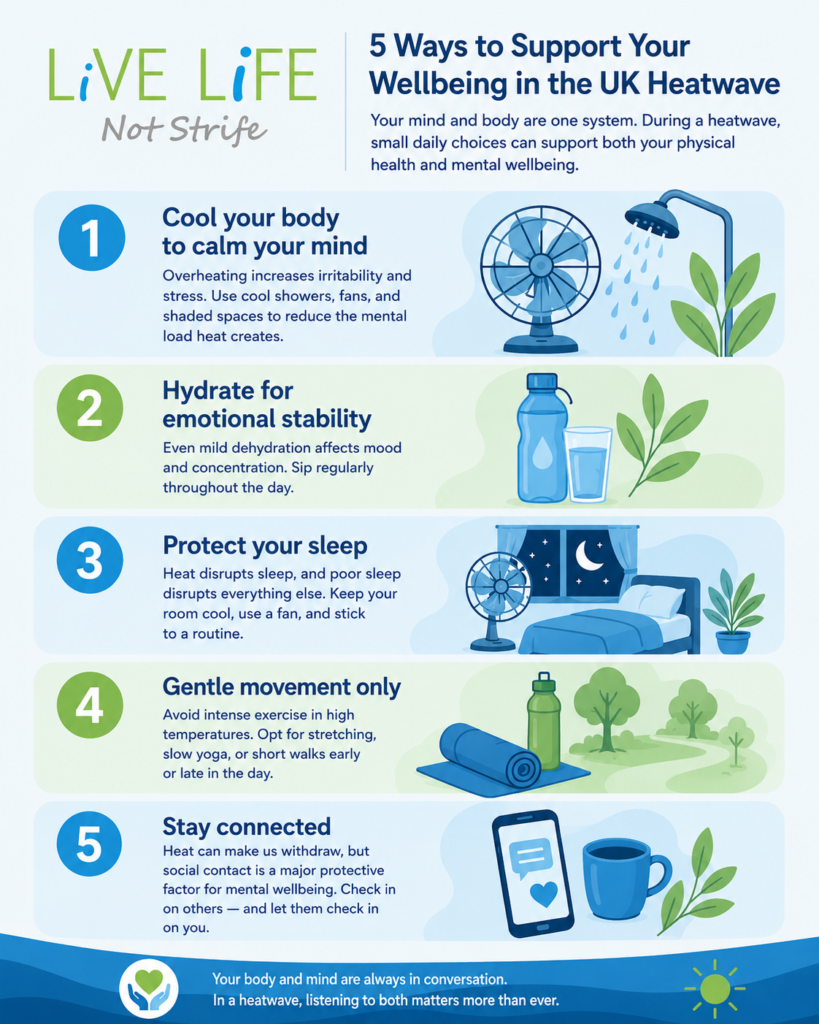
Physical health and mental wellbeing are not two separate systems running in parallel — they are one interconnected network. When the body is under strain (like during a heatwave), the mind feels it. And when the mind is stressed, the body responds. Helping people see this link is often the first step toward healthier habits.
Five ways to improve general wellbeing during the UK heatwave
These are framed in a way a psychologist might present them: practical, evidence‑based, and focused on the mind–body connection.
1. Stabilise your body temperature to stabilise your mood
Overheating increases irritability, reduces concentration, and heightens stress responses. Encourage people to:
- Use cool showers or a damp cloth on pulse points
- Keep curtains closed during peak heat
- Hydrate consistently, not reactively Cooling the body reduces the cognitive load that heat places on the brain.
2. Hydration as emotional regulation
Even mild dehydration can increase anxiety, fatigue, and low mood. A simple rule: drink small amounts often, not large amounts occasionally. You can frame it as: “Think of water as fuel for your emotional stability as much as your physical health.”
3. Protect your sleep to protect your resilience
Heat disrupts sleep architecture, which then affects memory, emotional regulation, and stress tolerance. Practical steps:
- Use a fan to circulate air
- Freeze a hot water bottle and use it as a cold pack
- Keep a consistent bedtime routine even if sleep quality dips Good sleep is the foundation of psychological resilience.
4. Gentle movement to reduce mental stagnation
High heat makes intense exercise risky, but inactivity can worsen low mood and anxiety. Encourage:
- Light stretching
- Short walks early morning or late evening
- Slow, mindful movement like yoga Movement supports mood by regulating cortisol and increasing mental clarity.
5. Social connection as a protective factor
Heatwaves can make people withdraw because they feel drained, but isolation amplifies stress. Suggestions:
- Check in on neighbours or friends
- Share a cool space (library, café, community centre)
- Keep conversations light and supportive Social contact is one of the strongest predictors of wellbeing, especially during environmental stress.