
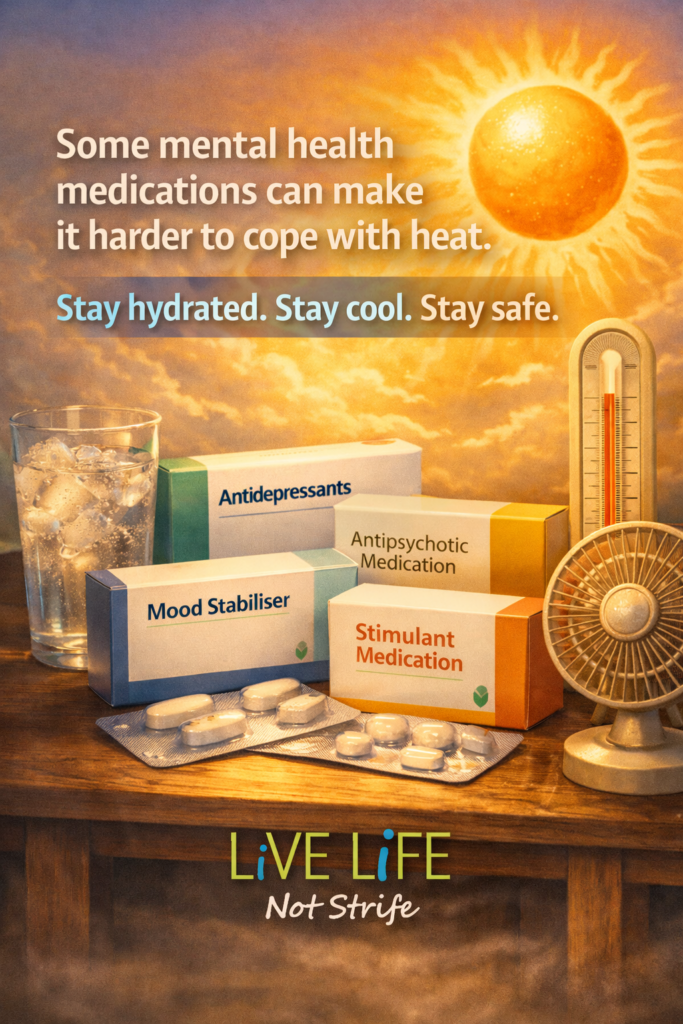
Some mental health medications can make it harder for your body to cope with extreme heat. This isn’t talked about enough — but it’s important, especially during a heatwave.
These medications can affect sweating, hydration, temperature regulation, or sun sensitivity. That means your body may struggle more to stay cool.
Medications that may increase heat sensitivity (not a complete list, check your medication leaflets, any doubt, call your chemist)
1. Antipsychotics
Certain antipsychotics can reduce your ability to sweat or regulate temperature. Common examples include:
Olanzapine, Risperidone, Quetiapine, Clozapine and Haloperidol
These can increase the risk of overheating or dehydration.
2. Antidepressants
Some antidepressants can affect sweating, hydration, or sun sensitivity. This can include:
SSRIs (e.g., sertraline, fluoxetine, citalopram), SNRIs (e.g., venlafaxine, duloxetine)
Tricyclics (e.g., amitriptyline, imipramine) — these are particularly known for heat‑related sensitivity
MAOIs
3. Mood Stabilisers
Some mood stabilisers can impact hydration or salt balance. Examples include:
Lithium (heat + dehydration can affect lithium levels), Valproate, Carbamazepine
4. Anti‑Anxiety Medications
Sedating medications can make you less aware of heat stress. Examples include:
Benzodiazepines (e.g., diazepam, lorazepam), Pregabalin, Gabapentin
5. ADHD / Stimulant Medications
Stimulants can increase body temperature and reduce appetite or thirst. Examples include:
Methylphenidate, Lisdexamfetamine, Dexamfetamine
6. Medications that increase sun sensitivity
Some mental health medications can make skin more reactive to sunlight. Examples include:
Certain antidepressants (especially tricyclics) , Some antipsychotics, Mood stabilisers like lamotrigine.