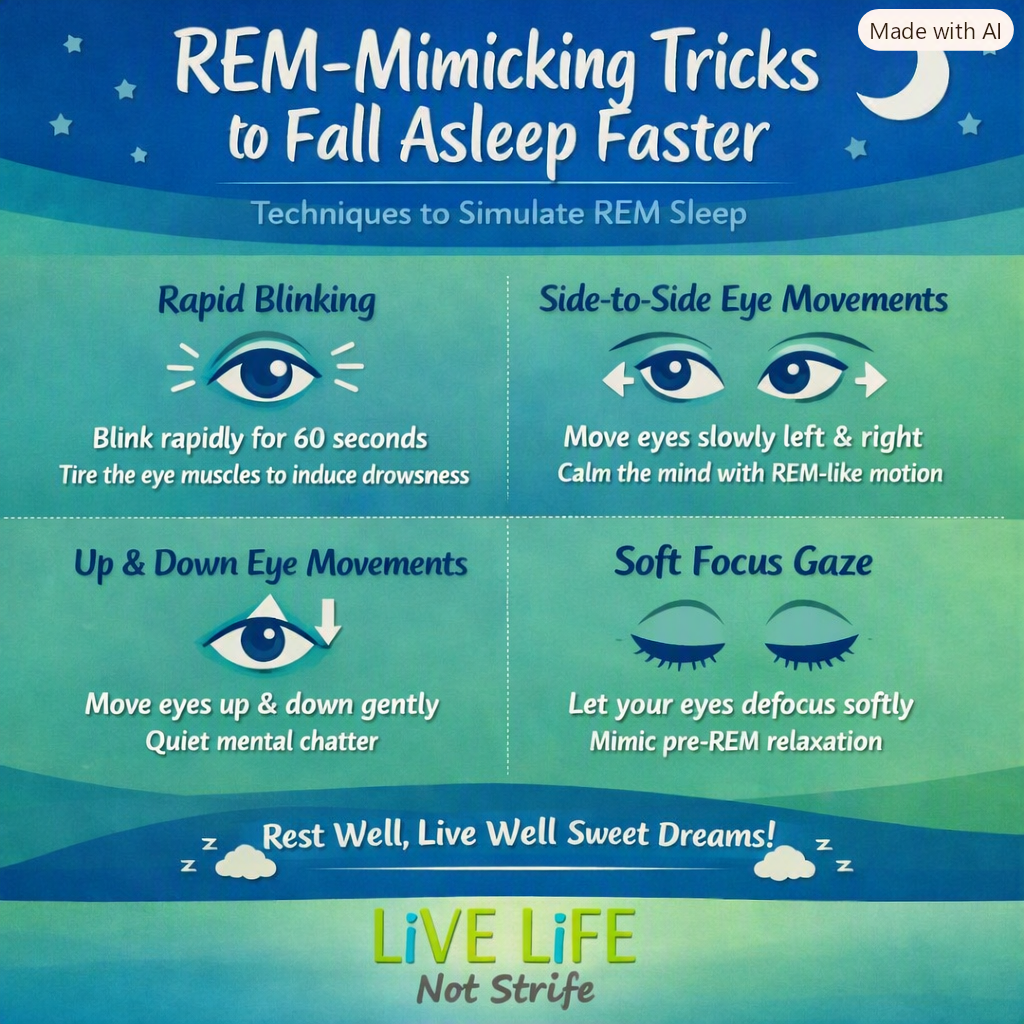
1. Blinking rapidly for 60 seconds
This sounds odd, but here’s why it works:
Rapid blinking fatigues the ocular muscles, similar to how REM sleep exhausts them. When the muscles tire, your eyelids naturally want to close. It also reduces visual stimulation and forces the brain to “power down.”
This is used in some military fatigue‑management drills to induce eye‑heaviness quickly.
2. Slow left‑to‑right eye movement
This one is grounded in neuroscience:
Slow horizontal eye movement activates the parasympathetic nervous system, the “rest and digest” mode. It mimics the saccadic movement seen in REM sleep, which helps the brain shift into a calmer state. It also disrupts racing thoughts because the brain can’t maintain high‑speed thinking while performing slow bilateral movement.
This technique is related to the therapy technique EMDR bilateral stimulation — but used here for sleep induction, not therapy.
3. Up‑down eye movement to reduce mental chatter
Vertical movement is less REM‑like but still effective:
It forces the prefrontal cortex to disengage. It interrupts looping thoughts. It creates a mild “brain fog” that makes sleep onset easier.
4. “Soft focus” gaze
Instead of closing your eyes immediately:
Let your eyes relax and go slightly unfocused. This mimics the pre‑REM drift where the brain stops processing detail. It reduces cortical activity and helps the transition into Stage 1 sleep.
Pilots use this when they need to fall asleep fast between rotations.
5. Eye‑roll technique
Not dramatic — just a slow upward roll:
This activates the same ocular muscles used in REM. It triggers a reflex associated with sleep onset. It’s surprisingly effective when combined with slow breathing.
Why these work
They all target the oculomotor system, which is tightly linked to:
- Autonomic nervous system regulation
- REM sleep transitions
- Cognitive load reduction
- Emotional processing shutdown
When you mimic REM‑like patterns, you essentially “trick” the brain into entering a sleep‑ready state.
Try all of them; what works best for you- one particular exercise or a combination of them?